
Quick Summary
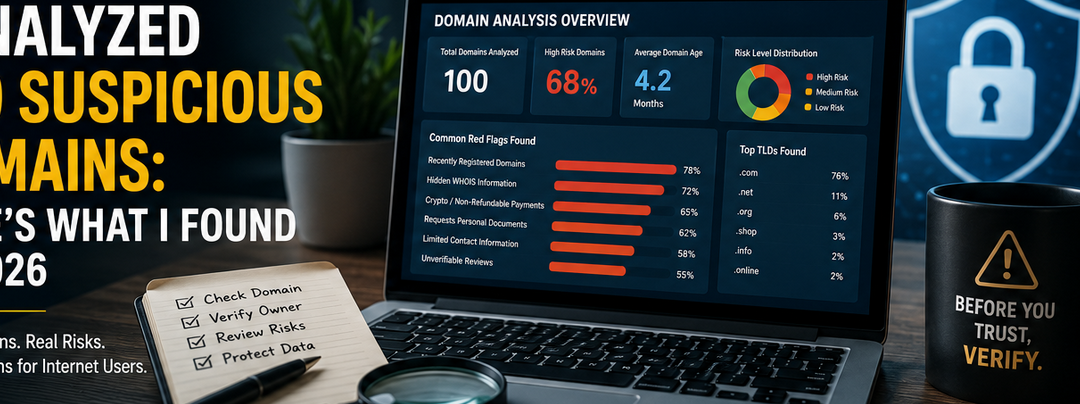
Over the past several months, I reviewed 100 fake id websites discussed across public forums, cybersecurity communities, scam reporting websites, and online discussions.
The goal was simple:
What common characteristics appear repeatedly among websites that raise concerns about privacy, trustworthiness, or consumer safety?
While every website was different, certain patterns emerged again and again.
Many of these websites shared:
- Recently registered domains
- Anonymous ownership information
- Aggressive marketing tactics
- Limited transparency
- Weak customer support
- Privacy concerns
- Requests for sensitive personal information
- Payment methods with limited consumer protections
This article explores the most common findings and provides practical advice for evaluating unfamiliar websites in 2026. To view the most authentic fake id websites that still operate and provide scannable replicas Read: Best fake id websites 2026 review.
Why Domain Analysis Matters More Than Ever
Most internet users evaluate a website based on appearance.
A modern design often creates an immediate sense of trust.
Unfortunately, appearance alone tells us very little about legitimacy.
Today, professional-looking websites can be built within hours using readily available templates.
Cybersecurity researchers often focus on something different:
The domain itself.
The domain can reveal valuable information about:
- Website age
- Registration patterns
- Ownership transparency
- Historical changes
- Trustworthiness indicators
In many cases, these signals tell a more complete story than design alone.
Read Also: Best fake ID Websites Vs Scams 2026 Reviews.
Pattern #1: Many Domains Were Surprisingly New
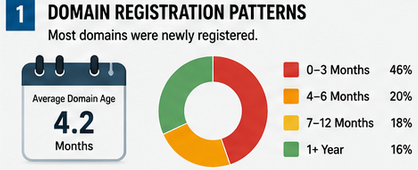
One of the most noticeable patterns involved domain age.
Many websites examined had been registered relatively recently.
This doesn’t automatically indicate wrongdoing.
New businesses launch every day.
However, cybersecurity professionals often consider domain age when assessing risk.
Questions worth asking include:
- When was the domain registered?
- Has ownership changed recently?
- Has the website existed for years or only months?
Long-established domains generally have:
- More public history
- Greater accountability
- More independent reviews
- More visible online presence
When a website handling sensitive information appears suddenly and has little historical footprint, caution may be warranted.
Pattern #2: Ownership Information Was Frequently
Hidden
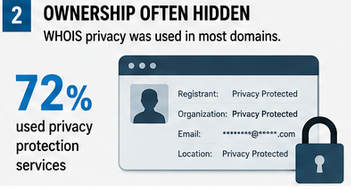
Another recurring observation involved ownership transparency.
Many domains used privacy protection services that concealed:
- Registrant names
- Physical addresses
- Contact details
Privacy protection itself is not unusual.
Many legitimate organizations use it to reduce spam and protect personal information.
However, when combined with other warning signs, hidden ownership can make independent verification difficult.
Consumers often ask:
Who actually operates this website?
If the answer is impossible to determine, risk assessment becomes more challenging.
Pattern #3: Trust Signals Were Often Surface-Level
Many websites displayed impressive trust indicators.
Examples included:
- Security badges
- Professional logos
- Customer testimonials
- Verification icons
- Positive review snippets
The problem?
Not all trust signals are equal.
During the review process, many websites relied heavily on visual trust elements while providing limited verifiable information about the organization itself.
A trustworthy business should ideally provide:
- Company information
- Support channels
- Privacy practices
- Clear policies
- Verifiable business history
A security badge alone should never replace independent research.
Pattern #4: Requests for Sensitive Information Appeared
Early
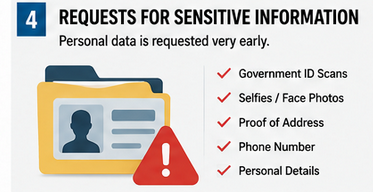
Many websites requested personal information very quickly.
Examples included:
- Government ID images
- Face photos
- Phone numbers
- Addresses
- Additional identity documents
Cybersecurity experts often recommend asking a simple question:
Is this information truly necessary?
Consumers should understand:
Every piece of personal data carries value.
Even seemingly harmless information can potentially be combined with other data sources to build detailed profiles.
The more information a website collects, the more important its privacy and security practices become.
Why Identity Documents Are Valuable to Criminals
Many people underestimate the value of identity documents.
A single document can contain:
- Full name
- Date of birth
- Address
- Identification numbers
- Signature information
Combined with additional personal details, such information may potentially be exploited in:
- Identity theft schemes
- Social engineering attacks
- Account takeover attempts
- Financial fraud
This is why cybersecurity professionals consistently emphasize protecting identity documents online.
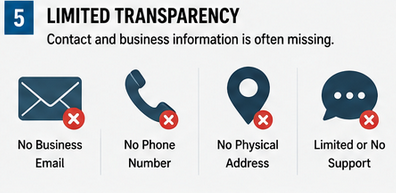
Pattern #5: Contact Information Was Often Difficult to Verify
Another recurring observation involved customer support.
Legitimate organizations generally provide multiple ways to communicate.
For example:
- Phone
- Physical address
- Support ticket systems
- Social media presence
Many suspicious websites offered only:
- Generic contact forms
- Anonymous email addresses
- Limited support options
This becomes important when customers experience problems.
If communication channels disappear, dispute resolution becomes much harder.
Pattern #6: Unrealistic Claims Appeared Frequently
Marketing language often revealed useful clues.
Common examples included:
- “100% guaranteed”
- “Never fails”
- “Works every time”
- “Risk-free”
- “Instant approval”
Experienced internet users generally view absolute claims cautiously.
No legitimate service can guarantee every outcome.
Overly aggressive promises often deserve additional scrutiny.
One of the oldest online safety principles still applies:
If something sounds too good to be true, investigate further.
Pattern #7: Payment Methods Sometimes Limited Consumer Protection
Many websites preferred payment methods that are difficult to reverse.
Examples often included:
- Cryptocurrency
- Gift cards
- Wire transfers
- Certain peer-to-peer systems
This doesn’t imply these payment methods are inherently problematic.
Many legitimate businesses accept them.
However, cybersecurity discussions frequently note that fraudsters may favor payment systems that provide limited chargeback or dispute mechanisms.
Before making any online payment, consumers should understand:
- Refund policies
- Dispute procedures
- Available protections
Knowledge of payment protections can significantly reduce risk exposure.
Pattern #8: Independent Reviews Were Often Limited
One of the strongest indicators of legitimacy is independent discussion.
Consumers should ask:
Can I find reviews outside the website itself?
A healthy online reputation typically includes:
- Positive reviews
- Neutral reviews
- Critical reviews
- Community discussions
A complete absence of independent discussion can make evaluation difficult.
Likewise, a large number of highly similar reviews appearing suddenly may deserve closer examination.
The goal is not perfection.
The goal is transparency.
Pattern #9: Domain Changes Happened More Often Than Expected
Several discussions referenced websites changing domains over time.
Reasons can vary:
- Rebranding
- Technical issues
- Business restructuring
However, frequent unexplained domain changes may make it difficult for consumers to:
- Track historical reviews
- Verify previous experiences
- Assess long-term reputation
Consistency generally contributes to trust.
Frequent identity changes often create confusion.
Pattern #10: Privacy Policies Were Sometimes Generic
Privacy policies can reveal a great deal about a website.
Unfortunately, many appeared:
- Extremely brief
- Generic
- Copied from templates
- Missing key details
A strong privacy policy should explain:
- What information is collected
- Why it is collected
- How it is stored
- Who can access it
- How users can request deletion
Consumers should never assume data protection practices simply because a privacy policy exists.
Reading the details matters.
What Consumers Can Learn From These Patterns
After reviewing 100 domains, a few lessons became clear.
The safest approach isn’t paranoia.
It’s verification.
Before sharing information online, ask:
Who owns this website?
Can ownership be independently verified?
How old is the domain?
Does the website have a meaningful history?
Are there independent discussions?
Can experiences be verified outside the site itself?
What personal information is requested?
Is every request reasonable?
What payment protections exist?
Can transactions be disputed if necessary?
A Simple Website Evaluation Checklist for 2026
Before interacting with any unfamiliar website:
Verify Ownership
Look for:
- Company details
- Contact information
- Public presence
Review Domain History
Research:
- Registration age
- Historical activity
- Reputation indicators
Check Independent Sources
Search for:
- Reviews
- Discussions
- Consumer reports
Understand Data Collection
Ask:
- What data is collected?
- Why is it needed?
- How is it protected?
Evaluate Payment Risk
Understand:
- Refund policies
- Dispute procedures
- Available protections
The Future of Online Trust
As artificial intelligence improves, websites will become even more sophisticated.
Professional designs will no longer be meaningful trust indicators on their own.
Consumers will increasingly need to evaluate:
- Transparency
- Accountability
- Data handling
- Reputation
- Verification practices
The future of online safety depends less on appearance and more on evidence.
Frequently Asked Questions
Are newly registered domains always suspicious?
No.
Many legitimate businesses launch new websites every day.
Domain age should be considered alongside other trust indicators.
Is hidden WHOIS information a red flag?
Not necessarily.
Many legitimate organizations use privacy protection.
The concern arises when hidden ownership appears alongside multiple additional warning signs.
Can professional-looking websites still be risky?
Yes.
Modern design tools allow almost anyone to build convincing websites quickly.
Appearance should never replace independent verification.
Why are identity documents valuable to criminals?
Identity documents may contain information useful in identity theft, fraud, and social engineering attacks.
Protecting sensitive personal information remains essential.
What is the most important lesson from this analysis?
Verify before you trust.
Independent research often reveals information that website design alone cannot.
Final Thoughts
After reviewing 100 suspicious identity-related website domains in 2026, the most important finding wasn’t a single red flag.
It was the combination of warning signs.
A newly registered domain may be harmless.
Hidden ownership may be legitimate.
Limited reviews may simply indicate a new business.
However, when several concerns appear together—anonymous ownership, aggressive marketing, requests for sensitive information, weak transparency, and limited consumer protections—the overall risk profile changes significantly.
The internet remains an extraordinary resource, but informed caution is still one of the best tools available to consumers.
Before sharing personal information or making online payments, take a few minutes to verify who you’re dealing with. That small investment of time can help prevent much larger problems later.