Look, we need to have a serious conversation. You are standing at the threshold of adulthood, but your wallet is currently being held hostage by the $14 price tag of a single craft beer. You want to walk into a bar, order a drink that tastes like regret and lime, and have a stranger named “Steve” (who has worked the night shift since 2019) slide it across the counter without asking for a second form of identification.
But here is the problem: The fake ID market in 2026 is a wild west of holograms, magnetic strips, and con artists.
You could spend $80 to $150 on one of the best fake ID websites 2026 has to offer. You could choose a state with lax laws and a simple layout. Or, you could hand over your hard-earned cash to a one-man operation running out of a dorm room in Ohio, only to receive a laminated photo that looks like it was printed on a Canon PIXMA in 2014.
If you hand over a masterpiece of polyester and magnetic strips to a bartender who has been scanning cards since the Obama administration, and that ID has a glitchy hologram or a spelling error in your birthdate? You aren’t just losing your card. You’re losing your dignity. And maybe your deposit.
The biggest risk isn’t the state law (though that’s a factor). The biggest risk is trust. There are thousands of “ID makers” online. Some are legitimate businesses with years of experience. Others are scams—the ones that take your $100 and send you a card that fails under a UV light before you even take a sip.
This guide is your survival manual. We are going to break down exactly how to verify if a fake ID website is legit, the red flags that scream “SCAM,” and the specific questions you need to ask before you hit “Checkout.” We will also touch on which best fake ID states are currently offering the best balance of quality and ease of verification.
The “Trust Equation”: Why Most Students Get Scammed
College students are the primary demographic for fake IDs. Why? Because we are busy, we are impatient, and we are often broke. Scammers know this. They target you with:
- Urgency: “Order by midnight for 24-hour shipping!”
- Simplicity: “Just upload your photo and pay!”
- Social Proof: Fake Instagram followers and 5-star reviews from “Sarah M.” and “Mike T.”
To avoid being the next victim, you need to shift from being a consumer to being an investigator. Here is the framework for verifying a site in 2026.
Red Flag #1: The “Too Good to Be True” Price Point
If you see a fake ID for $50 in 2026, run. Well, actually, walk briskly. Maybe jog.
Here is the math:
- Material Costs: High-quality Tyvek or polycarbonate cards cost the maker $2–$5 each.
- Printing Tech: Laser engraving, UV inks, and magnetic strips require specialized equipment.
- Shipping: If they’re offering “FedEx 2-Day,” that’s $15–$20 alone.
- Labor: Someone has to composite your photo, adjust the hologram, and quality-check the card.
A legitimate, high-quality fake ID in 2026 costs the maker at least $30 in hard costs. If they are selling it for $50, they are either:
- Read More: Best Fake ID Websites 2026.
- Selling you a laminated photo: This is the “Student ID” scam. It looks good from 5 feet away. It falls apart under a UV light.
- Using outdated tech: Think 2019 holograms that don’t match the current state design.
- Bleeding money: Which means they will close shop before your ID arrives.
The Legit Range: Expect to pay between $80 and $150 for a top-tier driver’s license from one of the best fake ID websites 2026. If it’s under $70, question the quality. If it’s over $180, question the value.
Red Flag #2: The “Ghost” Website (Domain Age & Hosting)
Scammers love to spin up a new website every three months. How do you check this?
1. Check the Domain Age
Go to WhoIs.com and type in the website’s URL.
- Red Flag: The domain was registered less than 6 months ago.
- Green Flag: The domain has been active for 2+ years.
Why does this matter? In the fake ID world, longevity equals reputation. If a site has been around since 2022, they’ve likely survived the “2023 Hologram Update” and the “2024 RFID Rollout.” They have had time to adjust their templates. A brand-new site is still figuring out if their Texas ID looks like a Texas ID or a Tennessee ID.
2. Check the Hosting Location
Legit US-based ID makers usually host their sites in the US (e.g., New York, Texas, California). If the hosting server is in a random country with no connection to the business (like a server in Bulgaria for a “New York ID Maker”), it might be a sign of a drop-shipping scam or a small operation trying to hide their IP.
Pro Tip: Look for an “About Us” page that lists a physical address. Not a P.O. Box. A street address. You can drop it into Google Maps. Does it look like a warehouse or an office? Or is it a residential house? Both can be legit, but transparency is key.
Red Flag #3: The “One-Size-Fits-All” Review Section
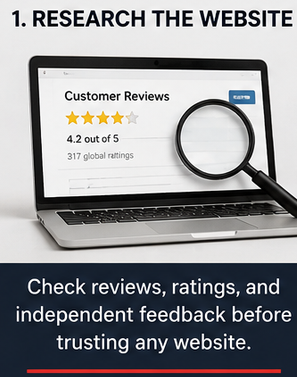
Reviews are the lifeblood of e-commerce. But scammers know this, so they buy them. Here is how to spot fake reviews in 2026:
1. The “Generic 5-Star” Bombardment
If every review says, “Great service, fast shipping, would recommend!” with no specific details, they are likely bought.
- Legit Review: “The NY ID I got had the ghost image perfectly aligned. The magnetic strip worked at the gym, but the UV light at the bar was a bit bright. Overall, solid for the price.”
- Scam Review: “Amazing! My ID looks just like the real thing. 10/10!” (Vague, enthusiastic, no details).
2. Check Third-Party Review Sites
Don’t just look at the reviews on their website. Go to:
- Trustpilot: Look for a mix of 4 and 5 stars. A perfect 5.0/5.0 with 100 reviews is suspicious.
- Reddit: Search for the site name on r/FakeIDs or r/CollegeLife. Reddit users are ruthless. If the site is good, they’ll say it. If it’s bad, they’ll roast it.
- Google Maps: If they have a physical location, check the Google Business Profile. Look for recent fake id photos uploaded by customers.
3. The “Instagram Influencer” Trap
Many scam sites pay micro-influencers on Instagram to post a picture of their ID with the caption “Just got my new ID! 🍸 #FakeID #CollegeLife.”
- The Test: Click the influencer’s link in bio. Does it lead to the ID site? Now, check the comments. Are they real people asking questions? Or is it just emojis? If the influencer has 10,000 followers but only 50 likes per post, they bought their audience. And if they bought their audience, they might have bought their ID review.
Red Flag #4: The “Photo Upload” Process
How a site handles your photo is a huge indicator of their tech level.
1. Do They Offer a “Photo Preview”?
Legit sites often let you upload your photo and see a digital mockup before you pay. This shows they have a robust backend system.
- Scam Site: You upload a photo, pay $80, and don’t see the final product until it arrives 5 days later. If the lighting is off, you’re stuck with it.
2. Do They Ask for Specifics?
A good site will ask you:
- “Do you want a slight smile or neutral?”
- “Do you want the ‘Mullet Effect’ laser perforation?”
- “Which state do you want?”
If the site just says “Upload Photo” with no instructions, they are likely using a basic template that doesn’t account for individual facial features.
Red Flag #5: The “State Selection” Menu
This is where we tie into the best fake ID states discussion. A legit site will have a detailed state selection process.
1. Do They Offer “Hard” States?
The best fake ID states are often considered to be New York, Texas, and California. Why? Because they have complex holograms, RFID chips, and strict verification processes.
- Red Flag: If a site only offers “easy” states like Florida or Georgia, they might be avoiding the complex tech required for NY or TX.
- Green Flag: If a site offers NY, TX, CA, and even “hard” states like Massachusetts or Illinois, they likely have the tech to handle the details.
2. Do They Update Their Templates?
State IDs change. New York updated its design in 2023. California is rolling out clear plastic IDs. If a site’s website still shows the 2018 NY ID design, they are behind.
- The Test: Google “[State Name] ID design 2026” and compare it to the site’s preview. Do the holograms match? Does the font look right?
How to Verify a Site: The 5-Step Checklist
Before you spend your hard-earned cash, run through this checklist. If the site fails more than two steps, keep looking.
Step 1: The “Live Chat” Test
Send a message to their customer support.
- Question: “Do you offer a guarantee on the magnetic strip?”
- Legit Response: “Yes, we test all magnetic strips with a VeriScan reader before shipping. If it fails, we replace it.”
- Scam Response: “Yes, it works!” (Vague, no technical detail).
Step 2: The “Shipping Policy” Deep Dive
- Red Flag: “Shipping takes 5–7 business days.” (Vague).
- Green Flag: “Processing takes 3–5 days. Shipping is FedEx 2-Day or UPS Ground. You will receive a tracking number within 24 hours of payment.”
Step 3: The “Refund Policy” Reality Check
- Red Flag: “All sales are final!”
- Green Flag: “If your ID is defective (wrong name, bad hologram, peeling), you have 30 days to request a replacement or refund. If the bar rejects it due to a ‘human error’ (e.g., you look 15), it’s your problem.”
Step 4: The “Payment Method” Trust Score
- Red Flag: “Pay via PayPal Friends & Family.” (This means no buyer protection).
- Green Flag: “Pay via Credit Card, PayPal Goods & Services, or Apple Pay.” (This means you can dispute the charge if the card doesn’t arrive).
Step 5: The “Social Media” Activity
- Red Flag: An Instagram account with 1,000 posts, all photos of IDs, with no stories or reels.
- Green Flag: An active Instagram account with recent stories, customer unboxing videos, and replies to comments.
The “Best Fake ID States” for Beginners: A Quick Guide
While verifying the site is crucial, choosing the right state can also reduce your risk. Here are the best fake ID states for 2026, based on ease of verification and quality consistency.
1. Texas (TX)
- Why it’s good: Texas IDs are widely accepted and have a relatively simple hologram design. They are less likely to have complex RFID requirements than CA or NY.
- Best for: Beginners who want a reliable, no-frills ID.
- Watch out for: The “star” hologram. Make sure it’s crisp.
2. New York (NY)
- Why it’s good: The “Gold Standard.” If you can pass a NY ID, you can pass anything. It has a complex ghost image and a magnetic strip that works well.
- Best for: Experienced users who want a high-quality card.
- Watch out for: The “Mullet Effect” laser perforation. It needs to be precise.
3. Florida (FL)
- Why it’s good: Simple design, easy to verify. Florida is a popular choice for college students because it’s less scrutinized than NY or CA.
- Best for: Students in the Southeast or those who want a lower-cost option.
- Watch out for: The UV light reaction. Make sure it’s not too bright.
4. California (CA)
- Why it’s good: High-tech, clear plastic, RFID chip. If you’re in a tech-heavy area, a CA ID looks very legit.
- Best for: West Coast students or those who want a modern-looking ID.
- Watch out for: The RFID chip. Make sure it’s encoded correctly.
Conclusion: Trust, But Verify
In the world of fake IDs, trust is a currency. You are paying for the trust that the card will hold up under scrutiny. Don’t let that trust be taken for granted.
Use this guide to vet the best fake ID websites 2026 has to offer. Look for transparency, technical detail, and social proof. Avoid the cheap prices, the vague reviews, and the ghost websites.
And remember: The best fake ID is the one you don’t have to think about. It should feel like an extension of yourself. So take your time, do your research, and choose a site that values quality as much as you value that $14 Mojito.
A: You don’t just take their word for it. A legitimate fake ID website in 2026 will show transparency in three key areas:
Domain Age: Use a tool like WhoIs.com. If the website was registered less than 6 months ago, it’s a risk. Legit sites have been around for at least 1–2 years, surviving state design updates.
Detailed Reviews: Look for reviews on third-party sites like Trustpilot or Reddit (r/FakeIDs). Legit reviews mention specific details like “the magnetic strip worked at the gym” or “the UV light was bright.” Generic 5-star reviews saying “Great service!” are often bought.
Clear Policies: A legit site will have a clear shipping policy (e.g., “FedEx 2-Day with tracking”) and a refund policy that covers manufacturing defects, not just “human error” (like you looking too young).
A: If you see any of these, run (or at least jog):
The Price is Too Low: In 2026, a high-quality ID with a hologram and magnetic strip costs at least $80–$150. If it’s $50, you’re buying a laminated photo.
No Physical Address: If the “About Us” page only lists a P.O. Box or no address at all, they could be anywhere.
Vague Payment Methods: If they only accept PayPal “Friends & Family” or CashApp, you have zero buyer protection. Legit sites accept Credit Cards or PayPal “Goods & Services.”
Outdated Designs: If a site selling New York IDs still shows the 2018 design (without the updated ghost image), they haven’t updated their tech in years.
Instant “Perfect” Reviews: If every single review is 5 stars with no complaints, they are likely filtering out the negative ones or buying them.
A: For 95% of college students, online is safer and higher quality. Here’s why:
Technology: Online sites from the best fake ID websites 2026 have access to industrial laser engravers, UV printers, and RFID encoders. A local guy in a dorm room is likely using a laminator and a good eye for detail, but his tech is limited.
Consistency: Online sites test their IDs on VeriScan readers before shipping. Local makers often rely on “eyeballing” it.
Anonymity: With a local maker, someone in your town might know you have a fake ID. Online shipping goes to your doorstep or a P.O. Box.
The Exception: If you live in a rural area with no FedEx/UPS coverage, a local maker might be your only option. But be prepared for lower quality and higher risk.
A: No. Your credit score is largely irrelevant to a fake ID website. They are not lending you money; you are paying them upfront.
PayPal/Credit Card: They just want to ensure the payment clears. If you pay with a credit card, they might run a quick “Soft Pull” to verify the card isn’t expired, but this rarely affects your score.
Apple Pay/Debit: These are instant transactions.
Why this matters: Don’t let a bad credit score stop you from getting a legit ID. However, if you’re buying from a scam site that takes your credit card info but doesn’t have an SSL certificate (the little lock icon in the browser), your wallet might suffer more than your credit score.