Searches for terms like “best fake ID sites,” “fake ID websites USA,” and “best fake ID websites 2026“ continue to appear across search engines every year. People may search these phrases for a variety of reasons, including curiosity, research, understanding online scams, or learning about the legal consequences associated with counterfeit identification.
Before relying on information found online, it’s important to understand that many websites making claims about fake IDs are unverified, anonymous, and often associated with fraud. Beyond the legal implications, many of these sites expose visitors to financial scams, identity theft, and data misuse.
This guide explains what searchers should know before ordering from websites advertising counterfeit IDs, including common warning signs, legal considerations, privacy risks, and safer alternatives for legitimate identification needs.
Why Are People Searching for “Best Fake ID Sites”?
Search interest in fake ID websites generally comes from several motivations:
- Curiosity about online marketplaces
- Research into counterfeit identification
- Students wondering about legal consequences
- Individuals comparing information found on forums
- Journalists and researchers investigating online scams
However, searching for information does not necessarily mean someone intends to purchase a counterfeit ID. Many visitors simply want accurate information instead of promotional claims published by anonymous websites.
Understanding Fake ID Websites
Websites claiming to sell counterfeit driver’s licenses or identification cards typically promise:
- High-quality replicas
- Fast shipping
- Anonymous payment methods
- Worldwide delivery
- “Undetectable” products
These claims should be approached with skepticism. Most such websites provide little or no verifiable information about their operators, locations, or business practices.
Many disappear after a short period and reappear under different domain names.
Why Many Fake ID Websites Cannot Be Trusted
One of the biggest misconceptions is that websites advertising counterfeit IDs operate like legitimate online businesses.
Unlike licensed businesses, many offer:
- No verified business address
- No customer support
- No refund policy
- Anonymous ownership
- Cryptocurrency-only payments
- No legal accountability
Because these businesses operate outside legitimate commerce, customers often have little or no recourse if something goes wrong.
Common Scam Tactics Used by Fake ID Websites
Consumer reports and cybersecurity researchers have identified recurring scam patterns across websites advertising counterfeit identification.
These include:
1. Payment Without Delivery
A website accepts payment but never ships anything.
2. Endless Excuses
Customers receive repeated messages claiming delays due to customs, production, or shipping issues.
3. Additional Payment Requests
Some sites ask for more money after the initial payment, claiming new fees or verification costs.
4. Identity Collection
Visitors may be asked to upload:
- Passport photos
- Driver’s license images
- Personal selfies
- Home addresses
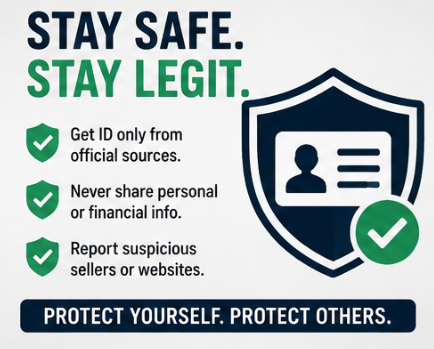
Providing sensitive personal information to unknown operators can create long-term privacy and identity theft risks.
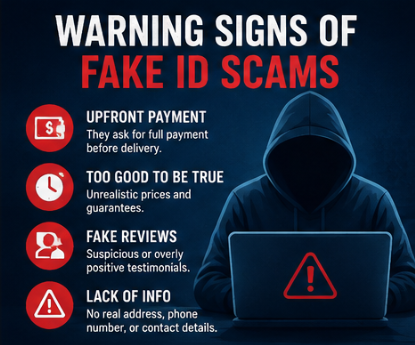
Fake Reviews Are Common
Many websites advertise hundreds of five-star reviews.
Unfortunately, fake testimonials are common online.
Warning signs include:
- Every review is positive
- No verified purchasers
- Generic wording
- Identical writing style
- No independent review platform
Always evaluate whether reviews come from credible, independent sources.
Why Cryptocurrency Is Frequently Requested
Many counterfeit-ID websites request payment using cryptocurrency.
This is often because cryptocurrency transactions:
- Are difficult to reverse
- Offer limited consumer protections
- Reduce chargeback risk for sellers
That does not automatically indicate fraud, but it does increase the financial risk for buyers because recovering funds can be extremely difficult if a transaction goes wrong.
Legal Risks of Counterfeit Identification
Counterfeit identification laws vary by jurisdiction, but using, possessing, or presenting a fake ID can result in serious legal consequences.
Potential outcomes may include:
- Criminal charges
- Fines
- Probation
- Educational disciplinary action
- Employment consequences
- Permanent criminal records in some cases
The severity depends on local laws and the circumstances involved.
Can Fake IDs Be Detected?
Modern identity documents include numerous security features designed to prevent counterfeiting.
Examples include:
- UV printing
- Holographic overlays
- Microprinting
- Laser engraving
- Embedded security patterns
- Specialized barcodes
- Machine-readable zones
Many businesses and government agencies also use electronic verification systems that can detect inconsistencies between an ID’s appearance and its encoded information.
Why Counterfeit IDs Are Becoming Easier to Detect
Technology used by businesses continues to improve.
Many venues now employ:
- Barcode verification tools
- Identity scanners
- Digital authentication software
- AI-assisted fraud detection
- Employee training programs
As verification technology evolves, counterfeit documents become increasingly difficult to use successfully.
Fake ID Photos and Privacy Concerns
Some websites ask customers to upload:
- Portrait photographs
- Signatures
- Government-issued ID images
- Selfies
- Proof of address
Once uploaded, users generally have no control over how these files are stored or used.
Personal images may remain on unknown servers indefinitely, increasing the risk of misuse or unauthorized disclosure.
What About “Fake ID Front and Back” Images Online?
Search engines often display images labeled as fake IDs or comparisons between counterfeit and genuine documents.
These images should not be viewed as reliable references because:
- They may be digitally altered.
- They may depict novelty items.
- Their authenticity is difficult to verify.
- They can spread misinformation.
Educational resources about document security are more reliable than anonymous image collections.
The Problem With Anonymous Websites
Legitimate businesses generally provide:
- Company registration details
- Customer support
- Clear terms of service
- Refund policies
- Privacy policies
- Contact information
Many websites advertising counterfeit IDs provide none of these.
Anonymous ownership significantly increases consumer risk.
Identity Theft Risks
Sharing personal information with unknown websites can expose individuals to:
- Identity theft
- Financial fraud
- Account takeover
- Phishing attempts
- Social engineering attacks
Protecting personal information should always be a priority when interacting online.
Search Trends in 2026
Interest in keywords such as:
- best fake ID sites
- fake ID websites USA
- best fake ID websites 2026
- fake ID photo
- fake ID front and back
reflects ongoing curiosity and online discussion. However, search popularity should not be interpreted as evidence that any website is legitimate or trustworthy.
Users should critically evaluate search results, verify sources, and prioritize reputable legal and educational information.
Safer Alternatives for Legitimate Identification Needs
If you need valid identification, consider legitimate options such as:
- Renewing an expired driver’s license.
- Applying for a state identification card.
- Obtaining a passport where applicable.
- Replacing a lost or stolen ID through the appropriate government agency.
- Contacting your local motor vehicle or licensing authority for guidance.
These official channels provide lawful and secure ways to obtain identification documents.
Frequently Asked Questions
Are fake ID websites legal?
The legality depends on the jurisdiction and the specific activity involved. Many jurisdictions prohibit the creation, sale, possession, or use of counterfeit government-issued identification.
Can fake ID websites be trusted?
Many operate anonymously, making it difficult to verify their claims or recover money if problems occur.
Why do fake ID websites ask for personal information?
They often request photos and identifying details to create documents or verify submissions, but sharing such information with unknown operators carries significant privacy risks.
Are online reviews of fake ID websites reliable?
Not always. Reviews can be fabricated, selectively displayed, or copied from other sources. Independent verification is essential.
Can counterfeit IDs be detected?
Modern security features and electronic verification systems have made counterfeit identification increasingly detectable.
Key Takeaways
Anyone researching the phrase “best fake ID sites” should approach online claims with caution. Anonymous operators, unverifiable testimonials, irreversible payment methods, and requests for sensitive personal information all increase the potential for fraud and privacy harm.
Understanding how counterfeit-ID websites typically operate—and the legal and security risks involved—can help consumers make informed decisions and avoid common online scams. For those who need valid identification, official government-issued documents remain the safest and most reliable option.