
Fake ID websites have become incredibly sophisticated in 2024. U.S. border agents have seized 1.1 million counterfeit driver’s licenses. These numbers show a sharp jump from 640,000 seizures in 2022, highlighting this underground industry’s quick expansion.
The statistics paint a concerning picture. Almost half of US adults between 18-25 know someone who has used a fake ID to get into age-restricted venues or buy products (45%). A whopping 71% of people think getting a fake ID is “somewhat easy” or “very easy“. Modern counterfeiters target the underage market with advanced products. Their fake IDs come with holograms, bar codes, and laser engraving that can trick electronic scanners.
Recent developments have made things more worrying. Services like OnlyFake claim they can create hundreds of identity documents simultaneously using AI and neural networks. These operations proudly announce making up to 20,000 fake IDs each day. Such scale and speed of production at affordable prices has never been seen before.
This piece will help you spot the most common red flags on fake ID websites. You’ll learn 11 key warning signs that will help you verify identification legitimacy and stay informed in this increasingly complex digital world.
Unrealistic Pricing Promises
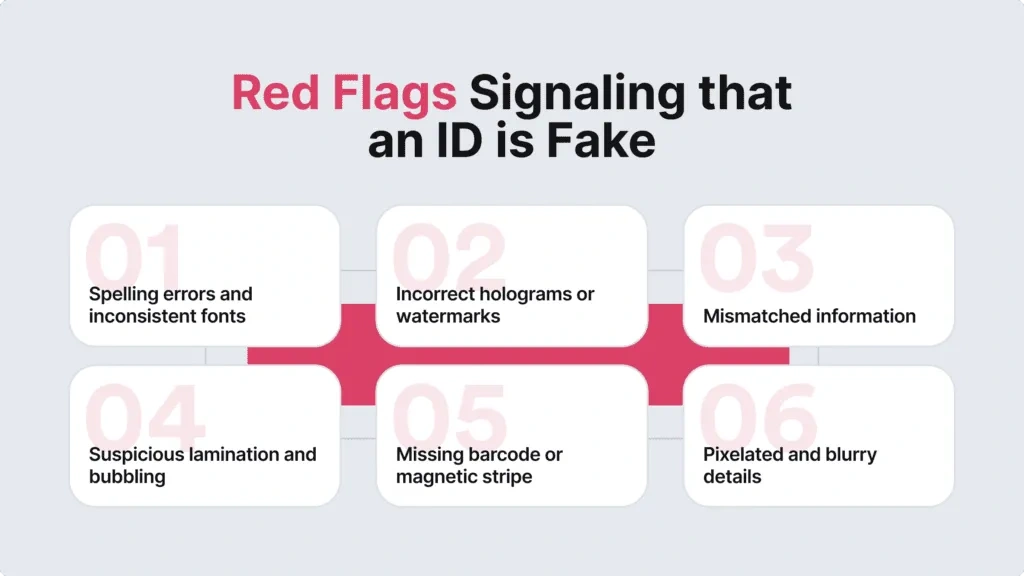
Image Source: iDenfy
Pricing structures on fake ID websites tell a lot about their legitimacy. I found that authentic prices for high-quality fake identification documents usually stay within certain limits. This makes it easy to spot websites that have questionable pricing models.
What Unrealistic Pricing Promises Mean
Price points that seem too good to be true on fake ID websites usually are. Recent investigations found platforms that sell supposedly “sophisticated” fake IDs for just $10. A service called OnlyFake tried to sell AI-generated passports and driver’s licenses from 26 different countries at $15. These prices are way below what real high-quality fake IDs cost. Quality fake identification needs special materials, equipment, and expertise that can’t work at such low prices.
Why Unrealistic Pricing Is a Red Flag
Low prices point to either a scam or poor-quality products. Quality fake IDs usually cost between $150-$200 for single purchases. These prices show the complex work needed to create believable forgeries with security features. Legitimate services also keep their prices steady instead of changing them often.
Websites that promise premium fake identification documents at much lower prices are likely:
- Running scams that take your money without sending products
- Sending very low-quality IDs that won’t work
- Stealing personal information
- Running undercover sting operations
How to Spot Unrealistic Pricing on Fake ID Websites
You need to watch for several things to spot suspicious pricing:
- Extreme Price Differences – Be careful of sites selling IDs under $50 when normal prices are $150-$200
- Too Many Discounts – Real services rarely give big group discounts that lower prices to $60-$80 per person
- Pricing Changes – Look out for prices that change a lot without reason
- No Cost Details – Good vendors explain what your money pays for (materials, shipping, etc.)
- Free Duplicates – Quality fake IDs cost a lot to make, so free copies usually mean poor quality
Some fake ID operations say they’re based overseas to justify lower prices. This excuse alone doesn’t explain huge price cuts. Even international operations spend a lot to make convincing documents with security features.
The truth is simple. Making sophisticated fake identification that can pass modern verification systems needs big investments in materials and expertise. This shows up in the prices of more 10-year old operations.
No Secure Payment Options
Image Source: Checkout.com
Legitimate websites must protect users’ financial information with secure payment options. The payment methods that fake ID websites accept tell you a lot about their security practices and legitimacy.
What Secure Payment Options Should Look Like
Good payment systems have multiple protection layers. They use strong encryption to turn sensitive data into unreadable code during transmission. On top of that, trustworthy sites use tokenization to replace payment information with unique identifiers that protect customer data. These secure payment gateways need multi-factor authentication, so users must verify their identity in several ways before they complete transactions.
The best payment systems follow Payment Card Industry Data Security Standard (PCI DSS) regulations. These standards set strict rules for handling customer payment information. You’ll see clear security indicators on legitimate websites, like a padlock symbol in your browser’s address bar and HTTPS in the URL.
Why Lack of Secure Payment Is Risky
Using fake ID websites without secure payment options puts you at huge risk. Research shows that payment fraud ate up nearly 3% of ecommerce revenue in 2022. The cost of cybercrime will reach $13.82 trillion by 2028.
Money loss isn’t the only problem. Unsecured payment methods can lead to:
- Identity theft through data breaches
- Unauthorized transactions from compromised information
- Fraudulent charges with limited recourse
- Legal troubles from dealing with illegal operations
A data breach in the US now costs nearly $9.50 million. Criminals can use your stolen payment details to commit fraud on many other platforms.
How to Identify Unsafe Payment Methods
Watch out for fake ID websites that push high-risk payment options like cryptocurrency, wire transfers, or gift cards. These payment methods don’t protect your purchase and make it hard to trace or get your money back. While cryptocurrency has legitimate uses elsewhere, you can’t reverse these transactions, which is why scammers love them.
Stay away from sites without proper SSL/TLS encryption—you’ll spot these by missing “https://” at the start of their URL. Also avoid websites that don’t have clear privacy policies about handling your information.
Red flags should go up if a fake ID website pushes you to use strange payment apps or direct bank transfers instead of regular payment processors. Real businesses give you several secure payment options rather than limiting you to methods that only help fraudsters.
No Customer Reviews or Fake Testimonials
mage Source: Mysterium VPN
Customer testimonials build trust in online services. Research shows about 30% of online reviews are fake. You need a sharp eye to spot deceptive feedback on fake ID websites.
What Fake Testimonials Look Like
Fake testimonials have clear patterns that set them apart from real feedback. Made-up reviews use vague, generic language and skip specific details about their experience. These reviews often go overboard with praise or criticism without giving a balanced viewpoint. You’ll spot these common signs:
- Generic profiles using basic names like “John Smith” or random letters and numbers as usernames
- Clustered posting dates where many similar reviews show up at once
- Scene-setting language that talks more about stories than actual product use
- Repetitive phrases or similar sentence patterns across reviews
The FTC has stepped up against fake reviews with a new rule from October 2024. This rule bans fake consumer reviews and testimonials.
Why Reviews Matter for Fake ID Sites
Real testimonials help you learn about service quality and reliability. Studies show more than 50% of buyers won’t purchase if they think reviews are fake. Genuine feedback gives both good points and helpful criticism.
Real reviews build trust by sharing specific details about transactions, quality, and customer service. Many fake ID websites create false testimonials to seem reliable and customer-friendly.
How to Verify Real Customer Feedback
You need a system to check if testimonials are real. Start by looking at the reviewer’s profile history. Real reviewers usually have older accounts with reviews for different products or services. Look for verified purchase badges that show the reviewer bought the product from that platform.
Tools like Fakespot and ReviewMeta can find patterns of fake reviews. These work better with product reviews than local service reviews.
Check if reviewers mention getting free products or payment for their feedback – the FTC requires this disclosure. The review’s tone matters too. Personal stories with specific details usually sound more genuine than scripted praise.
No HTTPS or SSL Certificate
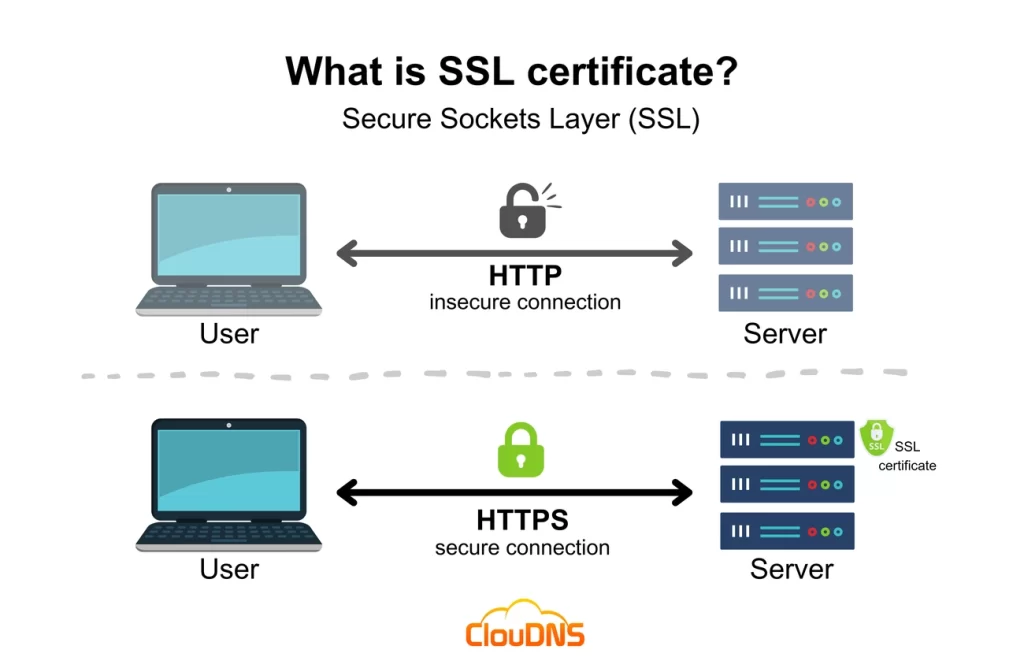
Image Source: ClouDNS
The padlock icon in your browser’s address bar protects you while browsing online. HTTPS encryption is a simple security feature that legitimate websites must use to protect users’ data. Many fake ID websites don’t use this protection.
What HTTPS Means for Security
HTTPS (Hypertext Transfer Protocol Secure) works as the secure version of HTTP and uses SSL/TLS encryption to protect data between your browser and the website’s server. Your sensitive information gets converted into unreadable code during transmission, which stops unauthorized access. HTTPS also maintains data integrity and blocks malicious third parties from adding unauthorized content like advertisements or malware to webpages.
Without HTTPS protection, anyone with simple interception tools can read all communications in plain text. This security gap affects all data you share with the website, including personal information and browsing habits.
Why SSL Is a Vital Part of Fake ID Sites
SSL (Secure Sockets Layer) certificates build trust by proving the website’s identity to users. Fake ID websites need proper SSL to achieve several key goals:
- Keep user information safe during transmission
- Stop data tampering by malicious third parties
- Build trust with potential customers
- Prevent browser warnings that scare away visitors
Modern browsers will flag non-HTTPS websites as “not secure” or “unsafe”. Yes, it is clear that legitimate websites have strong reasons to use proper encryption. Missing encryption raises a red flag when you check fake ID websites.
How to Check for HTTPS
You can learn about a website’s security status quickly. This knowledge will give you valuable protection:
Look at the website’s URL – secure sites show “https://” instead of just “http://”. The padlock icon in your browser’s address bar shows an active SSL certificate. You can click this padlock to see more details about the certificate, like who issued it and when it expires.
SSL Checker and similar tools can give you a full picture of SSL certificate installations. These tools make sure certificates work correctly, stay valid, maintain trust, and run without errors. We checked for common security gaps that might create problems.
A website might say it offers secure transactions, but missing HTTPS shows either carelessness or intentional avoidance of security standards. Neither option builds confidence in legitimate fake ID websites.
Too Many Best Fake ID States Claims
Fraudulent vendors often attract customers by making exaggerated claims about the “best fake ID states” on their websites. These claims tell us a lot about how legitimate they are and what they know about real ID security features.
What Overuse of ‘Best States’ Means
Websites that label multiple states as “the best” for fake IDs show they don’t really understand the industry. Recent analysis of over 130 million physical ID scans reveals only certain states are commonly counterfeited. Texas tops the list with a 1.18% fake rate. South Carolina follows at 1.15%, Arizona at 1.09%, Washington D.C. at 1.00%, and New Mexico at 0.83%. This data shows legitimate vendors target specific states for good reasons, not because every state makes an equally “good” fake ID.
Ohio’s story is interesting – it held the top spot in 2022 but fell completely out of the top five later. Massachusetts keeps its position with the lowest percentage of fake IDs. These changes show how ID security features and counterfeiting methods keep evolving.
Why It’s a Red Flag
Too many “best state” claims point to potential scams because real counterfeiters know the subtle differences between state IDs. Each state uses unique security elements to prevent forgery. Texas IDs are popular with counterfeiters because verifiers nationwide see them often and check them less carefully.
Arizona licenses show up frequently as counterfeits because their desert landscape design stands out but out-of-state verifiers don’t study them intensively. This targeted strategy differs from websites that claim excellence in many states at once.
How to Validate State Claims
You can assess state-specific claims by looking at:
- Specific security feature knowledge – Real vendors show detailed knowledge of particular state security elements instead of making general claims
- Reasonable explanation – Claims need logical reasons for targeting certain states (population size, design familiarity, etc.)
- Consistency with current data – The claimed “best states” should match current counterfeiting trends
- Focused offerings – Professional operations usually specialize in a few states rather than claiming expertise in dozens
History shows counterfeiters target specific states where recognition and verification challenges create opportunities. Any site claiming expertise in too many states probably lacks the specialized knowledge needed for convincing forgeries.
No Contact Information or Fake Support
Legitimate businesses always show their contact information clearly, while fake ID websites don’t share these most important details. You shouldn’t ignore this red flag.
What Legitimate Contact Info Looks Like
Good businesses give you several ways to reach them. They have phone numbers that connect you to well-trained staff members, company email addresses that match their website, and real business locations. Customer service numbers that work during business hours are vital. Following industry standards, real businesses tell you when they’re available and how quickly they’ll get back to you – usually within 24 hours by email.
Real social media accounts add another trust factor. Business profiles that are genuine usually have a long history and lots of followers. These accounts match the company’s brand and keep their communication professional.
Why Missing Contact Info Is Suspicious
Missing contact details make customers lose trust quickly. About 73% of customers walk away from deals when contact information is wrong or missing. Fake ID sellers hide their contact details on purpose to avoid getting caught.
This secretive behavior suggests they’re trying to:
- Duck customer complaints and refund requests
- Stay hidden from law enforcement
- Run temporary scam websites that vanish after taking payments
Real businesses want their customers to reach them easily. A website that won’t share simple contact details probably has something to hide.
How to Test Customer Support
You should check the support team thoroughly before trusting a fake ID website. Start by calling their phone numbers – if they don’t work, it’s probably a scam. Try to contact them through different channels to see if their responses match up and make sense.
Watch how long they take to respond. Real businesses get back to you when they say they will, but scammers often take forever or ignore you completely. Be careful if you get multiple responses from different “support” accounts after posting about a business publicly – that’s a big warning sign that someone’s trying to impersonate the company.
A fake ID website might look professional, but if it’s missing proper contact information or the support seems off, you’re likely looking at a scam.
Overuse of Stock Images or AI-Generated Photos
Visual elements on fake ID websites reveal a lot about their legitimacy. A closer look at these sites shows that many use generic imagery that signals potential fraud.
What Stock or AI Images Look Like
Stock images are pre-created pictures that designers purchase to illustrate publications. These images on fake ID websites appear as unnaturally perfect visuals with distinct characteristics. Note that these images show people in sterile, staged environments—like the infamous “diverse team high-fiving in an office” or “person with headset against white background.” The visuals seem disconnected from reality and present sanitized versions of life and work without texture and authenticity.
AI-generated images contain subtle artifacts that reveal their synthetic nature. These images have problems with hands (malformed fingers), text (gibberish words), and eyes (lifeless or unfocused). You’ll also notice inconsistent lighting, unnatural skin textures, and “broken” lines where objects intersect.
Why Fake Photos Are a Red Flag
Generic visuals immediately damage credibility. Research shows that 87% of consumers globally want to trust an image’s authenticity. A website’s use of recognizable stock photography suggests that their marketing lacks effort—hinting that their products might be equally generic or fraudulent.
Fake ID websites’ reliance on stock imagery points to potential scams. Any legitimate ID service would display actual examples of their work instead of generic visuals.
How to Spot AI-Generated Fake ID Photos
You can identify AI-generated fake IDs by looking for:
- Anatomical inconsistencies (particularly in facial features)
- Building elements with impossible architecture (like rooflines pointing left while window lines point right)
- Unnatural behavior patterns in group photos
- Repetitive patterns where randomness would be expected
Tools like AI or Not, Google Images reverse search, and TinEye help verify if an image is artificially created.
No Social Media Presence or Fake Profiles
Why It Matters for Fake ID Sites
Social media authenticity has become vital as young people grow more doubtful about what they see online. Trust plays a key role when customers want to buy services, so fake ID websites without real social channels raise red flags right away. These operations avoid creating real social profiles because they run temporary scams meant to vanish after taking payments, despite their claims of being reliable.
Real social connections matter more than fancy production or trending content when you look at fake ID services. Brands that connect openly and give meaningful responses to their audience build lasting customer loyalty.
How to Check for Authenticity
You can spot real profiles by doing this:
- Look at the follower-to-engagement ratio—thousands of followers with little interaction means bought followers
- Check content quality—fake accounts often use recycled images, memes, or copied content
- Look for profile transparency—vague bios with generic phrases instead of real details point to fraud
- Review join dates—very new accounts making big claims need extra caution
A quick check of social media gives valuable insights about whether a fake ID website deserves your trust or runs another scam operation.
Unrealistic Turnaround Times
How to Verify Delivery Claims
Fake id laws require sellers to have solid reasons for promising specific shipping timeframes. You should check if websites clearly separate processing times from transit times. Sites that blur these lines probably make promises they can’t keep. There’s another reason to be careful – look for websites that explain possible delays and let you track your order. Trustworthy sites spell out their shipping policies and plan for delays, unlike those promising perfect delivery every time.
Domain stability tells us a lot about how fake ID websites operate. My research shows that URL patterns help expose the most deceptive players in this underground market.
What Frequent Domain Changes Indicate
Domain changes usually mean someone’s trying to avoid detection or blacklisting. The most sophisticated fraud rings switch domains faster than ever—sometimes multiple times per day. They play a digital shell game where domains exist just long enough to commit fraud before disappearing. These shady domains show strange traffic patterns that spike, vanish, and pop up under new names. You’ll notice a clear pattern: domains show up in multiple applications on a few devices, then suddenly go dark.
Why It’s a Red Flag
Fraudulent operations and frequent domain changes go hand in hand. Real businesses build stable online presence, while scammers know they need temporary setups. Domain parking companies have become a breeding ground for malicious content. Research shows most parked domains now lead visitors to scams and malware. HTTP redirects create even more security risks by letting attackers slip in as “man-in-the-middle” threats.
How to Track Domain History
You need special tools to look into domain history. WHOIS history records are a great way to get information about previous owners. These records show when domains were registered, what name servers they used, and registrar data that connects different domains. Looking at domain registration history before buying can help you stay away from domains with spam or blacklist issues. On top of that, domain monitoring tools can spot sudden WHOIS record changes that might mean someone transferred the domain without permission.
Comparison Table
| Red Flag | Key Indicators | Why It’s Suspicious | How to Verify | Risk Level |
|---|---|---|---|---|
| Unrealistic Pricing | Prices below $50; Too many discounts; Price inconsistencies | Quality IDs typically cost $150-$200; Good materials and expertise need higher pricing | Look at standard market prices ($150-$200); Review detailed cost breakdowns | High |
| No Secure Payment Options | No HTTPS/SSL; Few payment choices; Only accepts cryptocurrency | Makes fraud more likely; No buyer protection | Look for HTTPS/padlock symbol; Check SSL certificate; Find multiple payment methods | High |
| No/Fake Reviews | Basic profiles; Reviews posted on same dates; Vague comments; Similar patterns | Reviews are fake 30% of the time; No proof of actual purchases | Use tools to analyze reviews; Look up reviewer profiles; Search for verified buyers | Medium |
| No HTTPS/SSL | No padlock symbol; URL lacks “https://”; Bad certificates | Anyone can read your data; Easy to hack | Check if URL starts with HTTPS; Look up SSL certificate status; Use SSL checking tools | High |
| Multiple “Best States” Claims | Says they know too many states; Lacks security details | Good vendors stick to specific states; Shows they lack real expertise | Look up current fake ID trends; Check if they know state details | Medium |
| Missing Contact Info | No phone numbers; Basic email addresses; No office location | They can’t be held responsible; Easy to disappear | Try contacting them; Check how fast they reply; Test different contact methods | High |
| Stock/AI Images | Too perfect photos; Wrong body parts; Weird details | No real work samples; Shows generic business | Search images online; Look for AI signs; Find real photos | Medium |
| No Social Media | New accounts; Few likes; Fake followers | Looks temporary; Not a real business | Check follower numbers; Look at post quality; See when they joined | Medium |
| Unrealistic Turnaround | Same-day delivery; Impossible shipping times | Quality work takes time; Rush jobs mean scams | Compare with normal times; Check processing and shipping | High |
| Missing Policies | No refund rules; Hidden privacy terms; Unclear conditions | Law requires these; Shows lack of responsibility | Find their policies; Read their terms; Check if they follow laws | High |
| Frequent Domain Changes | Many redirects; Short-lived websites; Strange traffic | Trying to hide; Won’t stay long | Check WHOIS history; Watch domain changes; Look for redirects | High |
Conclusion
You need alertness and knowledge to spot fake ID websites. This piece outlines 11 key red flags that signal potential fraud. These warning signs are the foundations of a complete security net that protects you from increasingly sophisticated scams.
The most obvious red flag is unrealistic pricing. Quality forgeries typically cost $150-$200, so legitimate fake IDs can’t possibly sell for $10-$15. On top of that, it gets riskier when secure payment options are missing, which opens the door to financial fraud and identity theft.
Fake testimonials, missing HTTPS/SSL certificates, and bold claims about “best fake ID states” show these operations lack legitimacy. Missing contact details, stock photos, and non-existent social media accounts point to temporary scam operations that vanish after taking your money.
Three more red flags complete this pattern of deception: unrealistic delivery times, missing policies, and frequent domain changes. Each sign might look small on its own, but together they paint a clear picture of fraud.
Security experts say spotting these signs early helps you dodge both financial losses and legal troubles. These warning signs will stay your best defense against more convincing scams as fake ID technology advances.
Anyone looking to use fake ID services should review websites carefully against each red flag mentioned here. Legitimate services leave digital traces that set them apart from temporary scams. The comparison table gives you a quick way to check any suspicious website.
Scammers keep changing their tactics, but they rarely fix all security issues at once. Your knowledge of these red flags is your strongest shield against counterfeit ID scams today and tomorrow.
Key Takeaways
Understanding these red flags can protect you from sophisticated fake ID scams that have increased dramatically, with over 1.1 million counterfeit licenses seized in 2024 alone.
• Pricing reveals legitimacy – Legitimate fake IDs cost $150-$200; anything under $50 signals scams or dangerous low-quality products
• Security features are non-negotiable – Missing HTTPS/SSL certificates expose your data to interception and indicate unprofessional operations
• Multiple red flags compound risk – Fake testimonials, stock images, missing contact info, and unrealistic delivery times together signal fraudulent intent
• Domain instability indicates temporary scams – Frequent URL changes and redirects suggest operations designed to disappear after collecting payments
• Missing policies violate legal requirements – Absent refund or privacy policies indicate non-compliance and lack of accountability
The combination of these warning signs creates a clear pattern of deception. While individual red flags might seem minor, their presence together strongly indicates fraudulent operations that prioritize quick profits over customer security and satisfaction.
FAQs
Q1. What are some key indicators of a fake ID in 2025? Common red flags include blurry or inconsistent fonts, misaligned text, missing or incorrect holograms, and UV-reactive features that don’t match official standards. Always compare the physical description on the ID to the person presenting it, checking for discrepancies in height, weight, or eye color.
Q2. How can I verify if a website selling IDs is legitimate? Look for secure payment options with HTTPS encryption, clear contact information, authentic customer reviews, and transparent refund policies. Be wary of sites with unrealistic pricing, frequent domain changes, or those that only accept cryptocurrency payments.
Q3. What should realistic pricing look like for high-quality fake IDs? Legitimate high-quality fake IDs typically cost between $150-$200. Prices significantly lower than this range, especially under $50, often indicate scams or dangerously low-quality products.
Q4. Why is the absence of HTTPS or SSL certificates a major concern? Websites without HTTPS/SSL leave your data vulnerable to interception. This security feature is standard for legitimate businesses, so its absence suggests an unprofessional or potentially fraudulent operation that doesn’t prioritize customer data protection.
Q5. How do frequent domain changes indicate potential scams? Frequent URL changes and redirects often signal temporary operations designed to evade detection. Legitimate businesses invest in stable online presences, while scam operations may cycle through domains rapidly to avoid blacklisting and continue fraudulent activities.