Introduction
Identification documents play an essential role in modern life. Whether you’re boarding a domestic flight, opening a bank account, applying for a job, renting an apartment, or proving your age, government-issued identification is often required.
Unfortunately, confusion persists around the differences between legitimate identification, Real ID-compliant driver’s licences, counterfeit IDs, novelty cards, and forged documents. Social media and anonymous websites frequently blur these distinctions, leaving many people uncertain about what is legal and what could expose them to serious consequences.
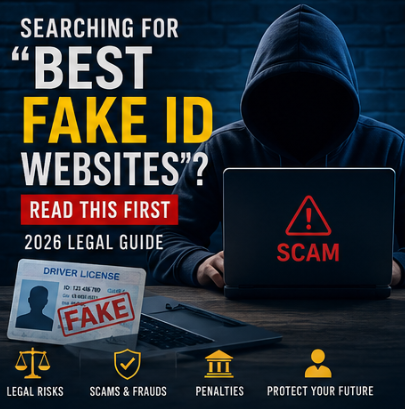
- Read More: Best Fake ID Websites 2026.
This guide explains the legal differences between Real ID and fake identification, how the Real ID system works in the United States, common misconceptions, potential criminal penalties, and why legitimate identification remains the safest and only lawful option.
What Is a Real ID?
A Real ID is a state-issued driver’s licence or identification card that meets federal security standards established under the Real ID Act of 2005.
The law was enacted following recommendations made after the September 11 attacks to strengthen identity verification and document security.
Although states continue issuing driver’s licences, compliant cards must satisfy enhanced verification requirements before issuance.
Generally, applicants must provide documentation verifying:
- Legal identity
- Date of birth
- Social Security number (where applicable)
- Lawful status
- Residential address
Once approved, the identification includes security features designed to reduce fraud and counterfeiting.
What Is a Fake ID?
A fake ID is any identification document that falsely represents a person’s identity, age, or eligibility.
Examples include:
- Counterfeit driver’s licences
- Altered government IDs
- Forged passports
- Modified birth certificates
- Fraudulent military IDs
- Digitally manipulated identification documents
In many jurisdictions, creating, possessing, selling, or using such documents to deceive another person may violate criminal law.
Understanding the Key Differences
Although Real IDs and fake IDs may appear visually similar, they differ fundamentally.
Real ID
A Real ID:
- Is issued by an authorised government agency.
- Requires identity verification.
- Contains multiple security features.
- Is recognised for official purposes where applicable.
- Exists within government records.
Fake ID
A fake ID:
- Is not lawfully issued.
- Misrepresents identity or age.
- May copy government designs unlawfully.
- Can be used to facilitate fraud.
- Lacks legitimate governmental validation.
The distinction is not merely technical—it is the difference between a valid government credential and a fraudulent document.
Why Governments Introduced Real ID
The Real ID programme aims to improve confidence in identity documents by introducing stronger issuance standards.
Objectives include:
- Reducing identity fraud
- Improving document security
- Standardising verification procedures
- Supporting aviation security
- Preventing duplicate identities
While individual states continue issuing licences, compliant documents follow minimum federal security requirements.
Common Security Features of Legitimate IDs
Modern identification cards include numerous anti-counterfeiting features.
These may include:
- Laser engraving
- Microprinting
- Ultraviolet elements
- Holographic overlays
- Ghost photographs
- Machine-readable barcodes
- Tactile printing
- Fine-line backgrounds
- Optical variable inks
Security features vary between issuing authorities and are updated periodically.
How Fake IDs Are Typically Detected
Businesses and authorities use a combination of visual inspection and technology.
Common methods include:
- Barcode verification
- Ultraviolet light inspection
- Magnification of microprint
- Checking holograms
- Comparing facial features
- Examining fonts and spacing
- Looking for signs of tampering
- Electronic ID scanners where permitted
No single feature determines authenticity; trained personnel typically assess multiple indicators.
Legal Consequences
Laws differ by jurisdiction, but offences involving fraudulent identification may include:
- Possession of counterfeit documents
- Forgery
- Fraud
- Criminal impersonation
- Identity theft
- False representation
Possible penalties can include:
- Criminal prosecution
- Monetary fines
- Community service
- Probation
- Imprisonment in serious cases
- Suspension of driving privileges
- A permanent criminal record
The severity often depends on how the document was obtained or used and the applicable laws.
Effects Beyond Criminal Court
Even where criminal penalties are limited, the consequences may extend further.
Potential impacts include:
Employment
Some employers conduct background checks that may reveal fraud-related convictions.
Education
Schools and universities may have disciplinary codes addressing dishonesty or unlawful conduct.
Immigration
Non-citizens may face additional immigration consequences depending on applicable law.
Professional Licensing
Many regulated professions require applicants to disclose certain criminal convictions.
Identity Theft Risks
People sometimes overlook another significant issue: sharing personal information with unverified websites or individuals.
Sensitive information may include:
- Full legal name
- Home address
- Date of birth
- Passport-style photographs
- Signature samples
- Contact details
If mishandled, this information could increase the risk of identity theft or financial fraud.
Common Misconceptions
“If It Looks Real, It’s Legal”
Appearance does not determine legality. What matters is whether the document was legitimately issued and used lawfully.
“It’s Only a Novelty”
Some novelty items may be lawful when clearly marketed as props and incapable of being mistaken for official identification. A document intended to deceive others is a different matter.
“Nobody Checks IDs Carefully”
Many businesses invest in employee training and verification technology, particularly in industries subject to age-verification laws.
“Using It Once Isn’t Serious”
Legal consequences vary, but a single incident can still result in criminal charges or institutional discipline.
Why Businesses Take ID Verification Seriously
Businesses often have legal obligations relating to age-restricted goods and services.
Examples include:
- Alcohol retailers
- Tobacco retailers
- Cannabis dispensaries (where legal)
- Casinos
- Financial institutions
- Vehicle rental companies
Failure to verify identity appropriately can expose businesses to regulatory penalties and civil liability.
What to Do If You Lose Your ID
If your legitimate identification is lost or stolen:
- Report it where appropriate.
- Contact the issuing authority.
- Request an official replacement.
- Monitor for signs of identity theft if you suspect misuse.
Replacing an official document through the appropriate authority is the lawful solution.
Frequently Asked Questions
Is a Real ID mandatory?
Requirements depend on the purpose for which the identification is being used and the laws in force. Alternative federally accepted identification documents may also be available in certain circumstances.
Can a fake ID become legal later?
No. A fraudulent document does not become legitimate through possession or use.
Are novelty cards the same as fake IDs?
Not necessarily. A novelty item that is clearly not intended to resemble or substitute for an official government document differs from a document designed to deceive.
Can businesses refuse suspicious identification?
Yes. Businesses may decline identification they reasonably believe is fraudulent and may follow applicable legal procedures.
What should I do if I suspect identity fraud?
Contact the relevant financial institutions, monitor your accounts, consider placing fraud alerts where available, and report the matter to the appropriate authorities.
Best Practices for Protecting Your Identity
You can reduce the risk of identity-related fraud by:
- Keeping identification documents secure.
- Avoiding unnecessary sharing of personal information.
- Monitoring financial statements regularly.
- Using strong passwords and multi-factor authentication.
- Shredding documents containing sensitive information before disposal.
- Reporting lost or stolen identification promptly.
Conclusion
Understanding the distinction between Real ID-compliant identification and fraudulent documents is increasingly important in a world where identity verification is part of everyday life. A Real ID is a government-issued credential that meets enhanced security standards and is backed by official identity verification. A fake ID, by contrast, is a document that falsely represents identity or age and may expose individuals to legal, financial, educational, and professional consequences.
Whether you are applying for a new licence, replacing a lost identification card, or simply learning about document security, relying on legitimate government-issued identification is the safest approach. Staying informed about the law, recognising the risks of identity fraud, and protecting your personal information can help you avoid unnecessary complications and make informed decisions.