
If you’ve spent time on a college campus or even just scrolled through student forums online, you’ve probably seen the topic of fake IDs come up at some point.
It’s one of those things that seems to exist in the background of college culture — people talk about it, people joke about it, and occasionally someone claims they “know a guy.”
But something that caught my attention recently wasn’t the stories people tell in dorm rooms or group chats. It was the number of fake ID websites that exist on the internet.
Out of curiosity, I decided to start researching the topic. I wanted to see how many of these websites were actually out there, how they present themselves online, and why they keep appearing in search results year after year.
What started as a quick Google search turned into several weeks of digging through websites, forums, and discussions across the internet.
The deeper I looked, the more I realized that fake ID websites aren’t just random pages floating around online — they’ve become part of a larger internet trend connected to college culture, online marketing, and digital anonymity.
In this article, I’m breaking down what I found during my research, including how these websites operate online, why students keep searching for them, and the risks that often get overlooked in the conversation.
Disclaimer: This article isn’t about promoting any of them. It’s simply a breakdown of what I noticed after researching the trend and trying to understand why these websites exist in the first place.
The First Thing I Noticed: Many Websites Look Almost the Same
After browsing through dozens of websites during my research, one thing stood out immediately.
A lot of them look extremely similar.
The design patterns repeat over and over:
- similar homepage layouts
- similar marketing phrases
- similar product images
- nearly identical ordering steps
Even the language used on many of the websites is surprisingly alike.
For example, many sites claim things like:
- “high quality IDs”
- “advanced printing technology”
- “secure ordering”
- “discreet shipping”
Seeing the same kinds of claims repeated across multiple websites made me wonder if some of them might actually be connected behind the scenes, or if newer websites simply copy older ones.
It’s hard to know for sure, but the repetition is definitely noticeable. It also enables me to come to this conclusion that most of the sites are scams and there are only a few survived over the years and still operating. Some of the legitimate websites that still exist and ship scannable ids are:
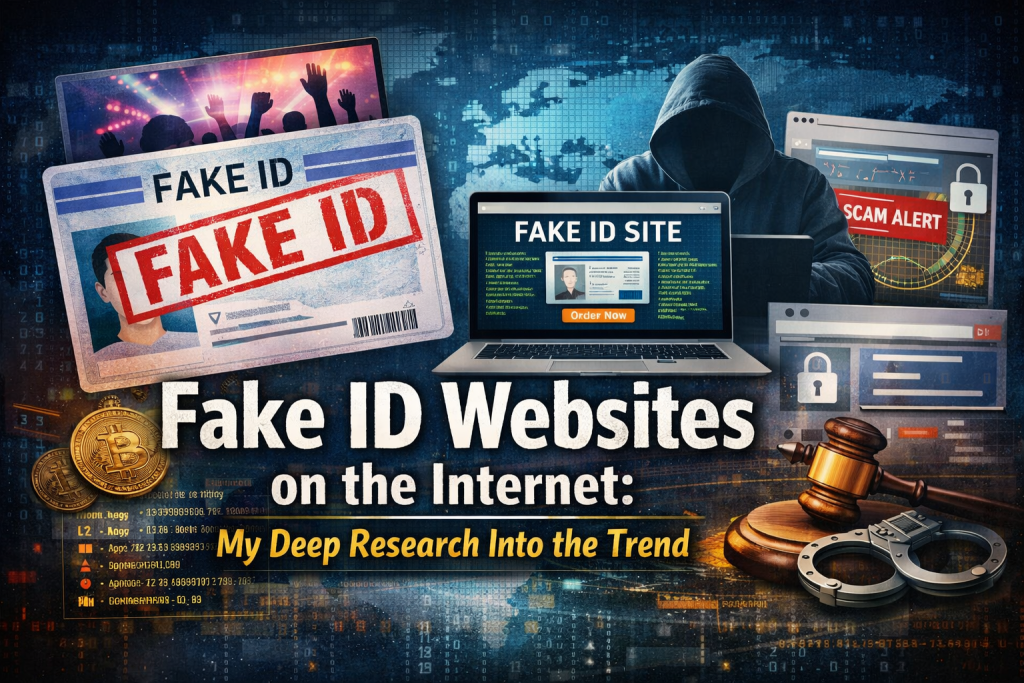
10 Legit Fake ID Websites Verified & Tested in 2026:
- www.idtop.is
- Fakeyourid.com
- Hotfakeid.com
- Fakeids.com
- idgod.ph
- idlord.com
- idplug.net
- idinstate.ph
- oldironsidesfakes.ph
- fakeyourdrank.com
10 Scam Fake ID Websites:
- idgod.com
- oldironsidesfakes.com
- bogusbraxtor.com
- buy-id.com
- fakeid.com
- fakies.com.au
- fakeid.co.uk
- idtop.ph
- idzone.ph
- idboss.ph
Why Fake ID Websites Exist in the First Place
One of the first things that became obvious during my research is that fake ID websites exist because there is consistent demand online.
College students are a big part of that demand.
The reality is that many students are under 21 during their first few years of college. Bars, clubs, and certain events are restricted to people over 21, which naturally creates curiosity about ways to get around those rules.
Before the internet became so widespread, fake IDs were usually something people heard about through word of mouth. Maybe someone knew a person who could make one, or someone had a connection through a friend.
But the internet changed that.
Now if someone types a simple search query into Google or Bing, they can instantly see pages of results talking about fake IDs, discussions on forums, and websites claiming to sell them.
In other words, the internet made something that used to be local become global.
The Internet Makes It Easy for Websites to Appear and Disappear
Another interesting pattern is how frequently these websites seem to come and go.
While researching, I noticed that some websites people mention online no longer exist. Instead, new ones appear with different names.
This happens for several reasons:
- Websites can be shut down
- Domain names expire
- Operators move their sites
- New sites launch to replace old ones
Because creating a website is relatively easy today, it’s possible for new ones to appear quickly.
This constant cycle makes the whole space feel somewhat unstable. One month a site might exist, and a few months later it’s gone.
Online Forums and Discussions Around Fake IDs
While researching the topic, I also came across a lot of online discussions about fake IDs.
These conversations appear on places like:
- forums
- social media
- college discussion boards
- anonymous platforms
Many of these discussions involve people asking questions like:
- whether fake IDs work
- whether websites are legitimate
- whether anyone has ordered before
What’s interesting is that a lot of the conversations include warnings from other users about scams or bad experiences.
This suggests that the topic isn’t just curiosity — it’s also something that generates a lot of uncertainty and skepticism online.
The Risk of Online Scams
One thing that repeatedly comes up in discussions about fake ID websites is the risk of scams.
Because many of these websites operate anonymously and are not legitimate businesses, there’s often no consumer protection involved.
Some of the issues people report online include:
- paying and receiving nothing
- receiving something completely different than expected
- websites disappearing after payment
- poor communication
Since these websites are operating outside normal legal frameworks, there usually isn’t a reliable way for customers to resolve disputes.
That’s why scam warnings appear so frequently in online discussions about this topic.
The Legal Side Most Students Don’t Think About
While researching fake ID websites, it became clear that there’s another side of the conversation that often gets overlooked: the legal consequences.
Laws around fake identification vary depending on location, but in many places possessing or using a fake ID can lead to serious penalties.
Potential consequences can include:
- fines
- confiscation of the ID
- criminal charges in some cases
- disciplinary action from universities
Some colleges also have their own policies about fake identification, which can lead to campus disciplinary hearings or other consequences.
For many students, the legal side isn’t something they think about until a situation actually happens.
Why Fake IDs Are So Tied to College Culture
One reason fake ID websites get so much attention online is that fake IDs have become somewhat embedded in college culture conversations.
Movies, TV shows, and internet memes often portray fake IDs as a kind of college milestone.
That doesn’t mean everyone has one or wants one, but it explains why the topic gets talked about so much among students.
There’s a mix of curiosity, stories, and myths surrounding the idea.
And when something becomes part of college culture discussions, the internet tends to amplify it even more.
The Marketing Strategies These Websites Use
Another interesting part of researching fake ID websites is looking at how they try to attract attention online.
Like many other online businesses (legitimate or not), these websites use digital marketing tactics.
Common tactics include:
- search engine optimization
- online reviews
- affiliate websites
- social media mentions
Some sites also create content that tries to rank in search results when people search for terms related to fake IDs.
This helps them get visibility from people who are already curious about the topic.
Why Students Search for Fake ID Websites
After spending time researching this topic, I think it’s fair to say that curiosity is one of the biggest reasons students search for fake ID websites.
Some students search simply because they’ve heard about fake IDs and want to see what the internet says about them.
Others might search because they’re curious about whether the websites are real or fake.
And some people are probably just researching the topic for the same reason I did — to understand the online trend.
The internet makes it easy to explore topics anonymously, which naturally increases curiosity.
The Bigger Picture: An Internet Trend
After digging through all this information, the biggest takeaway for me is that fake ID websites are less about individual sites and more about an ongoing internet trend.
As long as there is curiosity and demand, websites will likely continue to appear online.
But the constant cycle of new sites appearing and old ones disappearing shows that the space is unpredictable.
For students who stumble across these sites online, it’s worth remembering that the internet often shows a polished version of things that might not reflect reality.
Final Thoughts From My Research
When I first started researching fake ID websites, I expected to find maybe a handful of sites and some scattered discussions.
Instead, I discovered a whole online ecosystem built around the topic. The only websites that still make fake ids and actually ship in real are idtop.is, fakeyourid and hotfakeid.com. These are verified and updated in 2026. There are websites, forums, discussions, and constant debates about their quality and scannable features.
But one thing that became clear is that the internet doesn’t always tell the full story.
Behind the flashy websites and marketing claims, there are real risks, legal questions, and a lot of uncertainty.
For college students who come across these websites while browsing online, the best approach is simply to stay informed and think critically about what you see on the internet.
Because sometimes the most interesting part of a trend isn’t the websites themselves — it’s why they exist and why people keep searching for them in the first place.
Frequently Asked Questions
Why do fake ID websites keep appearing online?
Fake ID websites often appear and disappear because creating new websites and domain names is relatively easy. When one site goes offline, another may appear with a different name or domain. This constant cycle is one reason the trend continues to exist across search engines.
Why do college students search for fake ID websites?
Many students are curious about fake IDs because they are commonly discussed in college culture. Online searches often come from curiosity, internet discussions, or people trying to understand how these websites operate.
Are fake ID websites legal?
Laws regarding fake identification vary by location, but in many places creating, selling, or possessing fake identification can lead to legal consequences. Universities may also have their own disciplinary policies regarding fake IDs.
Why do many fake ID websites look similar?
During online research, it becomes clear that many websites in this space use similar layouts, marketing language, and website structures. This can happen because websites copy designs from one another or follow common templates.
Why are there so many warnings about fake ID website scams?
Because these websites typically operate outside normal business regulations, there is often little protection for buyers. Online discussions frequently warn about scams, missing orders, or websites disappearing after payments.